
Summary: Student housing is a rent-by-the-room investment strategy where you convert a single-family house near a college into multiple bedrooms, generating 2–3X the income of a traditional single-family rental on the same property.
This guide is written by Ryan Chaw, a real estate investor who built a seven-figure student housing business and used it to retire from his full-time job as a pharmacist. It covers exactly how to screen a market, choose and convert a property, structure a real deal, fill it with tenants, and run the business hands-off.
How do you start a student housing business that makes 2-3X more than traditional single family rentals?
I’ve built a seven-figure portfolio in this industry and retired from my full-time pharmacy job as a result. And let me tell you: student housing cash flows incredibly well and it can give you financial stability in the long run — especially during an economic downturn, when people go back to school to reskill.
But the market has shifted since I first got started, and the old “just buy near any campus” advice doesn’t cut it in today’s market.
Ready to find out why — and how to do it right? Read on!
Table of contents:
- What qualifies as student housing?
- Why you should build a student housing business
- How to invest in your first student housing property
- Starting and running your student housing business
Before we dive in, here’s a quick video where I break down exactly how I built my student housing portfolio — worth a watch if you want to see the numbers and the process in action before reading further:

What qualifies as student housing?
Student housing can mean a few different things. But in this guide, it means off-campus, single-family properties that you buy and rent out by the room to students. It does not mean building or investing in on-campus dorms, large purpose-built student apartment complexes, or anything requiring institutional-level capital.
Student housing can also refer to on-campus housing too — dorms, university-owned residence halls, big PBSA developments backed by REITs and institutional investors.
But this guide is written specifically for individual investors — people working full-time, with roughly $60,000 to $100,000 saved up for a down payment, who want to buy one property, convert it, and build cash flow from it.
If that’s you, keep reading.
Why you should build a student housing business
Short answer: A student housing business is a rental strategy where you buy a house near a college, convert it into multiple bedrooms, and rent it out by the room — usually to individual students rather than one family. Done right, it can produce two to three times the rent of a traditional single-family rental on the exact same property.
I know that sounds like a big claim. So let’s back it up.
Maybe you’re wondering, “Can investing in student housing actually work for me — even today, with everything going on in the housing market?”
Fair question.
The answer? Absolutely — what matters is how you do it.
Does the student housing model still work in today’s market?
Student housing had a wild run over the past few years. Off-campus rents jumped 7% in the 2023–24 leasing season, then 5.9% the year after. That kind of growth doesn’t last forever, and it hasn’t — rent growth cooled to 2.6% for 2025–26, and it’s landed around just 0.9% for the current 2026–27 season. And the number of U.S. high school graduates is projected to start shrinking this year, with a 12.5% drop expected by 2041.
At the same time, 92.1% of the top 50 highest-demand college markets are preleased. The bottom 50 are sitting at 54%.
The opportunities are there. But this all just means that you need to be careful about where you buy.
And I know how powerful a student housing business can be firsthand, because I’ve built my own — and I’ve made every one of these mistakes so you don’t have to. My rental income currently brings in multiple six figures a year in passive income, based on the model I’m about to walk you through, including a full real deal breakdown later in this guide so you can see the actual numbers.
Here’s my full story if you want to learn how I did it:

Is student housing profitable?
Yes, students typically rent by the bedroom, which is exactly what lets you generate a higher return than a traditional single-family rental on the same house.
And because students aren’t as picky about their lodging as high-income professionals might be, you don’t have to put as much money into renovations and appliances as you would if you rented out your house to one tenant. After all, students are in school — they just want a safe, quiet room to study and sleep in.
And finally, this model works great even in a weak economy. In downturns, more people tend to enroll in universities, which means that demand for student housing goes up. And even if one tenant leaves, you can still cover your mortgage with rental income from the other rooms.
Plus, renting to the right students can be genuinely fulfilling. By offering an affordable, off-campus housing option, you’re helping high-achieving students save on student loans and reach their goals — while building real financial security for yourself.
So — how exactly do you find the right market, the right property, and the right tenants in a landscape that now rewards precision over luck? That’s what we’ll break down next, starting with the exact screening framework I use.
How to invest in your first student housing property
Investing in your first student housing property is a big step. You want to make sure you’re setting yourself up for success by doing your homework before you get started.
One way to do this? Before deciding on a property, contact a local real estate attorney to confirm that you’re legally allowed to start a student housing business in your area.
It’s always best to be on the safe side since restrictions do exist in some markets — and later in this section, I’ll walk you through exactly what those restrictions tend to look like.
Step 1: Use this market-screening framework to pick the right location
The best way to ensure you get a good return on your investment and cash flow is to research your market. Location is one of the most important factors in terms of rent-by-the-room student housing success!
I run every potential market through these filters:
- The Tuition Affordability Filter: I target schools where tuition is at least $15,000 to $20,000 a year. Here’s my logic: if a family can already afford $20K in tuition, finding another $6,000 to $7,000 a year for rent is manageable. This tenant pool already has a real financial cushion.
- The 3,000-Enrollment Rule:I won’t invest near a school with fewer than 3,000 students. Below that, you don’t have a deep enough tenant pool to stay full year after year.
- Graduate and professional programs: I actively look for schools with strong medical, pharmacy, dental, engineering, business, and law programs. Grad students are, in my experience, more mature, more studious, and far less likely to trash a house than a 19-year-old undergrad three weeks into their first semester. Most universities also don’t guarantee them housing, which pushes them off-campus — and keeps them renting from you for multiple years instead of one.
- The enrollment trend check: Enrollment should be growing, but also pull the school’s actual 5-year on-campus enrollment trend, and weigh it against how much new student housing supply is coming online nearby. A school that’s growing but getting flooded with new construction can still be a bad bet.
Once a market clears those filters, then you get into the details: What do students in that location value most — walkability, affordability, and so on? What housing options already exist? Finding answers to those questions helps you identify (and fill) the holes in the market.
Step 2: Choose the right property
Your best bet is to pick large, recently-built houses to reduce the risk of having to deal with unexpected, costly repairs.
Yes, old houses tend to cost less initially, but the downside is that they come with a whole set of potential problems — poor insulation, pest and mold issues, old pipes, and so on.
How do I know? Because I actually bought a one-hundred-year-old house myself. And it ended up needing over $30k in unexpected repairs!
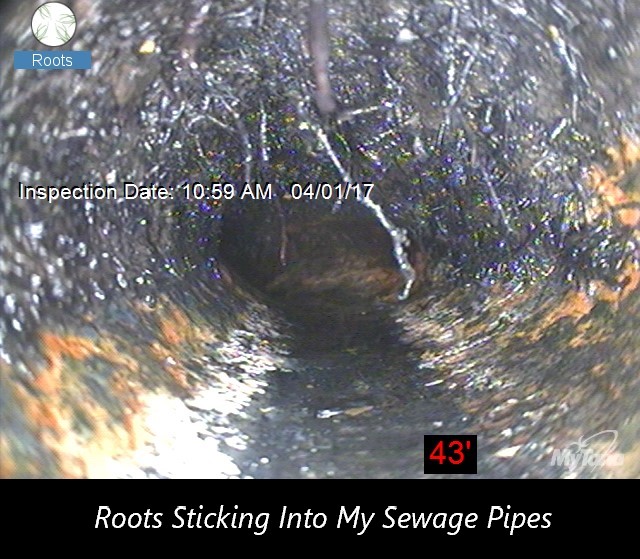
So, my advice? Stick with houses that are newer than the 1940s and at least 1,500 sq ft. For my own student housing business, I also perform regular inspections to identify any issues and address them before they get bigger (and more expensive) — it’s a lot cheaper to catch a small leak than to rebuild a bathroom.
How many bedrooms can a property support? (The Rule of 300)
Once you’ve got the right kind of house, the next question is how many bedrooms it can actually support. Here’s a shortcut I use — I call it the Rule of 300: take the total square footage and divide it by 300. A 1,500 sq ft house can comfortably support 5 bedrooms. An 1,800 sq ft house can support 6. From there, every extra 200 to 300 sq ft generally buys you one more bedroom.
A quick reference:
- 1,200 sq ft → 4 bedrooms
- 1,500 sq ft → 5 bedrooms
- +200–300 sq ft → +1 bedroom
That extra bedroom capacity can significantly improve your cash flow. I’ll show you the actual math on a real deal a bit further down.
There is a legal minimum bedroom size, though: 70 square feet, with a minimum width and height of 7 feet, and two points of egress (typically a door and a window). I actually rented out a converted 7×10 room next to a fireplace for $500 a month — proof that even a small, oddly-shaped space can cash flow.
That said, for the best balance of rent and cost, I aim for 100 to 120 sq ft (think 10×10 or 10×12) as my standard.
How many bathrooms do you need for student tenants?
Bedrooms are only half the equation, though — bathrooms are what actually make or break the layout. Plan for three renters per bathroom.
So, a six-bedroom, two-bath house could realistically house six students. A 7–9 bedroom property, on the other hand, needs at least 3 full bathrooms to hold up.
This ratio is a good balance: it gives everyone access to a shower without creating bottlenecks, and it also gives you, the owner, the chance to charge competitive rates.
How close to campus does student housing need to be?
Once you’ve settled on the property itself, the next thing to nail down is proximity. Overall, try to opt for a property that’s a few minutes’ drive away from campus.
However, do some research to see how many students have cars in the area, and decide if you need to invest in a property that’s within walking distance of campus instead.
Also, check what kind of public transportation is available — if there are good options, you can invest in properties that aren’t right next to campus and still find tenants.
How to pick the best location for your first student housing investment
Proximity is a local decision, though. The bigger question is which market you’re in to begin with — and that comes back to the screening framework above. Go where your ideal tenants actually are.
For example, if you want to rent to mature students who won’t throw wild parties, look for college towns that attract a lot of high-achievers focused on getting an education. Areas with great medical schools and hospitals — like Miami or Boston — are ideal for this.
Ultimately, you can’t go wrong choosing a place that attracts high-income earners, like doctors and engineers. Why? Because the better the quality of life a city provides, the more people want to move there — which increases the cost of living, including the rent you can charge and the home prices themselves.
I talk more about picking the right location here using my 1-Mile Rule:

Should you renovate common areas or bedrooms first?
Standard landlords pour money into the living room and dining room.
Don’t. In my experience, student tenants spend more than 90% of their time in their own bedroom — streaming, studying, sleeping. They’re barely in the common areas.
That means those big dining rooms, dens, and family rooms you’re not using? Fair game for conversion into bedrooms.
Where to buy: Zoning and legal due diligence
When picking your location, you also need to account for zoning laws.
So, before you buy, look up your target city or county’s ordinance on “occupancy limits” or “maximum number of unrelated occupants.” Many college towns cap this somewhere around 3 to 4 unrelated people per household.
If the local code is too restrictive for your plans, you generally have two real paths forward: file a change of use permit to register the property as a boarding or lodging house, or pursue a zoning variance.
But before you do anything, ask your real estate attorney about zoning laws and permits. That’s the only way you’ll know for sure before investing in a property.
Step 3: Research your property before making an investment decision
The questions you should ask yourself before investing are:
- How much rent could this property bring in?
- What are the maintenance costs?
- What’s the cash-on-cash return (the amount you earn relative to your investment)?
- What’s the cap rate (a property’s yield over a year if it was not mortgaged)?
Finding the answers to these questions will help you know what you’re getting yourself into. And to show you what that actually looks like in practice — not just in theory — let me walk you through a real deal.
Real deal teardown: $210,000 Stockton student rental
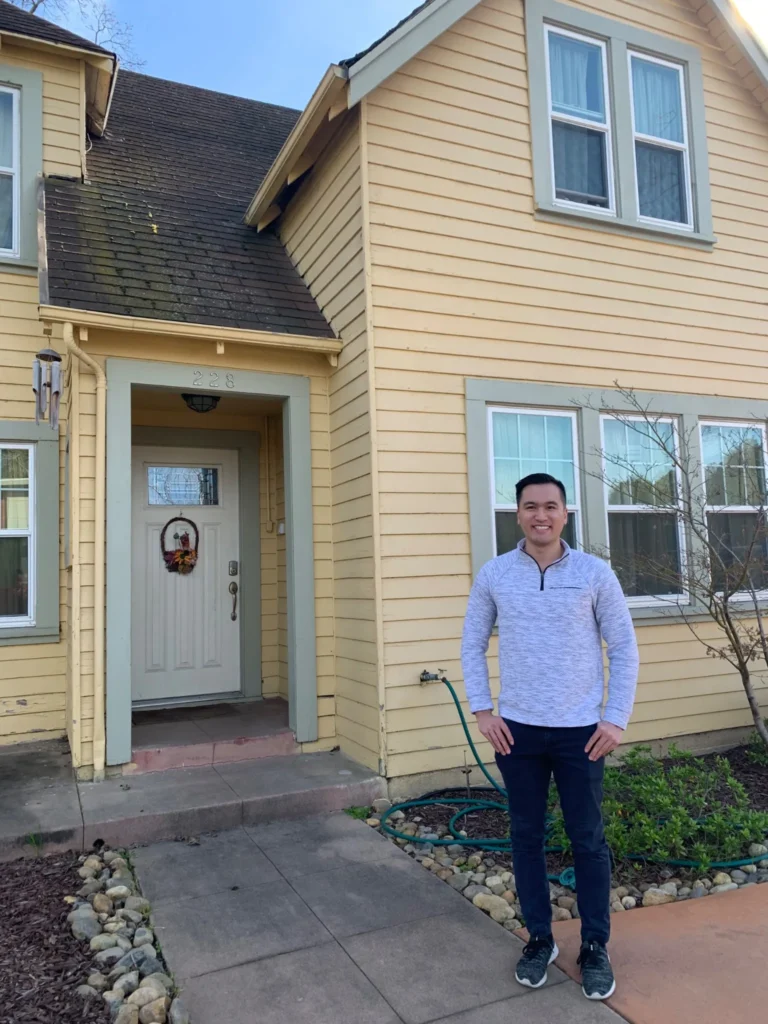
This is one of the properties in my own portfolio:
- Location: Stockton, California
- Purchase price: $210,000
- Down payment: I put $100,000 (a beginner mistake), but I recommend new investors to put down 20%.
- Rental income: $3,600/month
The thing is: If I’d rented this place out the traditional way — as a standard single-family rental — it would have brought in $2,167 a month. Not bad.
But I converted it to a 5 bedroom house, renting each room for an average of $620, for a total of $3,100 a month — an extra $1,000 a month over the traditional route, on the exact same house.
Then I pushed it further: expanding to a 6-bedroom layout with tiered pricing based on room size — $675, $640, and $550 — averaging that same $620 per room, but generating $3,600 a month in total gross rental income.
That meant nearly $1,500 more a month than renting it the “normal” way — just by applying the Rule of 300 and the bathroom-ratio math you just read about.
Step 4: Attract ideal tenants (PRIME method)
Once you have a property, you need to fill it with tenants. There are different ways to go about it, but I personally use a method I call the PRIME method to rent to college students that works well.
Here’s what PRIME stands for:
- P stands for ad placement. I advertise on sites where I know my target demographic is actively looking for student housing — I’ve had success with Roomies.com and Zillow.
- R stands for review. This is where I do some research into a prospective tenant’s presence and general reputation to get a sense of what kind of renter they’d be. A quick note here: I keep this step strictly to objective, consistently-applied criteria.
- I stands for identifying the tenant. This step is about figuring out if a prospective tenant has a good attitude and can get along well with others. Since student housing means tenants share common areas, picking the right people matters.
- M stands for measure of responsiveness. People who are good communicators, provide documentation when asked, and have a positive, professional attitude typically make great, responsible tenants.
- E stands for ensuring proof of income. I look at a co-signer’s (usually a parent’s) financial background, a FICO screenshot, or confirm the applicant has a savings buffer of $5,000 to $10,000. Otherwise, I check student loan documents or financial aid packages to get a realistic read on whether they can actually afford rent.
To scale this out, I use a Google Apps Script that scans for new leads from platforms like Avail every 5 minutes and automatically replies with an application, a virtual Matterport tour, and photos. I’ve noticed that Gen Z students typically apply to multiple listings at once and the property that responds first is usually the one that wins the tenant.
My funnel follows a “wide top, picky bottom” structure: I don’t charge an application fee, which keeps the top of the funnel wide. Early on, I ask a simple filter question — “are you a student or a healthcare/hospital worker?” — to weed out mismatched leads.
Then I get them on a tour, virtual or in person, before asking for paperwork; it builds trust, and it means the people filling out a full application are already motivated.
Learn more about my process here:

Starting and running your student housing business
Should you start your student housing business as an LLC?
Once you have your first investment, you can start expanding your portfolio. However, make sure you plan ahead for how to best build your company.
One question I often get is — should I make my company an LLC?
I actually don’t advise you to start there. Instead, buy your first property under your own name and then transfer it to an LLC later, if that’s the route you take.
That’s because lenders don’t usually lend to an entity, and you need to secure that loan first to buy your property.
However, an LLC can come with many benefits, such as reduced liability. So there are pros and cons.
If you’re interested in learning more, I talk about it here:

How to handle utilities in a student rental (the Bill-Back Method)
Once your property is up and running, one small operational decision makes a big difference: never include utilities in the rent.
Instead, pay the bills directly yourself, then split them evenly across the active bedrooms and bill tenants back for their share.
I do this for two reasons. First, it protects your cash flow — utility costs creep up over time, and if they’re baked into a flat rent number, that eats directly into your margin.
Second, it naturally incentivizes conservation. When students know their share of the electric bill goes up if they leave the AC running with the windows open, they tend to self-regulate.
How to run a student rental portfolio remotely with a virtual assistant and systems
Here’s the part that actually makes this a passive income business rather than a second job: delegation.
I offload 80% to 90% of the day-to-day admin and house management — posting and renewing ads on Craigslist and Facebook, managing the lead tracker, and coordinating showings — to a virtual assistant.
I also use “tenant empowerment”, meaning tenants directly manage utilities. If the internet is down, they can quickly get it fixed by talking to the provider instead of looping me in.
And I use cleanliness systems with signs, guidelines, and rules for tenants.
This is really what makes this passive income; I only use about an hour a week on managing my rentals so that I can focus on building out my portfolio and mentoring new investors.
Is student housing still a good investment today?
There you have it! Now you know how to start a student housing business — from screening the right market, to sizing bedrooms and bathrooms, to structuring the deal, filling it with tenants, and running it hands-off with a VA.
As you can see, this is still a great option for building a steady, long-term income stream and more financial stability.
Plus, once you have one successful rental, you can scale by reinvesting your profits, buying more properties, and repeating the process.
If you feel like you’d want to get started, but don’t know where, then download my free PDF as the first step:

I am from the Riverside California area, I may soon inherit property near the UCR college. I am very interested in housing mature students for business purposes and a healthy safe environment.