About Ryan Chaw: Ryan Chaw invested in rental property while working full-time as a pharmacist, grew his portfolio to 7 figures, and now helps other W-2 workers get started as a real estate investment mentor.
Quick answer: You can build a rental portfolio without quitting your job. I did it by house hacking my first property (living in it while renting out extra rooms), renting by the room to college students to maximize cash flow, and reinvesting 100% of that income into one new property per year. I'm a pharmacist with no finance background — and I went from $0 to a 7-figure rental portfolio in four years using this strategy, retiring from pharmacy at age 31.
Think you need to quit your job or spend 40 hours a week to build wealth through real estate? Think again.
While working 40+ hours a week as a pharmacist (often pulling 14- to 16-hour shifts), I built a seven-figure rental property portfolio by age 28—without a background in finance or endless free time. Today, my entire portfolio requires less than one hour a week of active management.
How? I used a simple, proven strategy to create cash flow, reinvest the profits, and buy one property at a time.
In this guide, I’ll show you exactly how I did it so you can start building passive income for yourself, even with a full-time job.
Key takeaways
Here’s what you need to know upfront (because I know you’re busy):
- Use the right strategy for fast cash flow and low risk. Renting by the room in college towns doubled my rental income and helped me scale faster than traditional investors.
- Reinvest early profits to grow fast. Instead of upgrading my lifestyle, I reinvested 100% of my cash flow into new properties, allowing me to grow steadily and reach financial freedom in just four years.
- Build time-saving systems to self-manage your properties while working full-time. I created systems for everything, from tenant screening to maintenance workflows, so I could manage my properties while working 40+ hours a week.
Ready to learn how? Here’s what we’ll cover:
Table of contents: Real estate investing while working full-time
- Why should you invest in real estate if you’re working full-time? My story
- Step 1: Calculate your target income with the reverse-engineering model
- Step 2: Choose the right strategy to build cash flow fast
- Step 3: Save for a down payment and buy your first rental property (even with a full-time job)
- Step 4: Reinvest profits to scale your portfolio
- Step 5: Systematize with tech and VAs (manage properties in under 1 hr/week)
- Step 6: Vet your tenants with the PRIME method™
- My top tips for beginners (working full-time)
First, let’s start by understanding why real estate is such a good investment for someone working full-time.
But before we do, I share who can invest while working full-time in this short video. It’s worth a watch before you dive into the rest of the article!
Why should you invest in real estate if you’re working full-time? My story
In short: If you’re stuck trading time for money in a full-time job, real estate is one of the few ways to build passive income that doesn’t require quitting first. I started at age 24 and built a 7-figure portfolio in four years without leaving my pharmacy job.
Can you build passive income while working a 9-to-5?
If you’re working full-time right now, chances are you’ve felt some version of what I felt: trapped in the “work-until-you’re-65” cycle.
I was putting in long hours as a pharmacist doing meaningful work, but I was burning out. Even with a stable, six-figure income, I lacked the one thing I actually wanted: freedom.
Maybe you’re in the same spot. What I craved wasn’t just more money — it was financial independence. Passive income that worked for me while I slept, so I wasn’t always trading hours for dollars.
Real estate was the one strategy I found that could realistically get me there while I kept my job.
What real estate can help you achieve in the long term
My motivation wasn’t purely financial, though — it was personal too.
Growing up, I watched my grandfather invest in real estate. He wasn’t handed easy opportunities; he bought properties in San Francisco at a time when racism made success difficult. Several home sellers literally slammed the door in his face because he was Chinese.
But he persisted and finally convinced an Italian butcher shop owner to sell his property to him and his family.
Over time, those properties appreciated significantly. His rentals provided him with cash flow for decades, rent increased every year, and he was able to retire early.
He even helped pay for my brother’s and my college education with the money he earned from his rentals.
Seeing the legacy he built is part of why I believe real estate is one of the most reliable ways for a regular, full-time employee to build lasting wealth.
Why real estate beats stocks or index funds for busy professionals
If you’re weighing real estate against other ways to invest, here’s what convinced me it was worth the effort, even with a demanding job:
- Cash flow: With the right strategy, monthly rental income that can eventually replace your salary
- Appreciation: Properties that grow in value over time, building wealth in the background
- Control: Unlike stocks or bonds, your decisions directly affect your investment’s performance
This combination of cash flow, appreciation, and control is why real estate can outperform stocks or index funds as a wealth-building strategy for people who already have a full-time job and limited free time.
The result: a 7-figure portfolio in 4 years, without quitting my job
These three pillars became the foundation of my strategy. I started small, buying one property per year while still working full-time.
Just four years later, I had built a seven-figure portfolio. By age 31, I was able to retire from my pharmacy job.
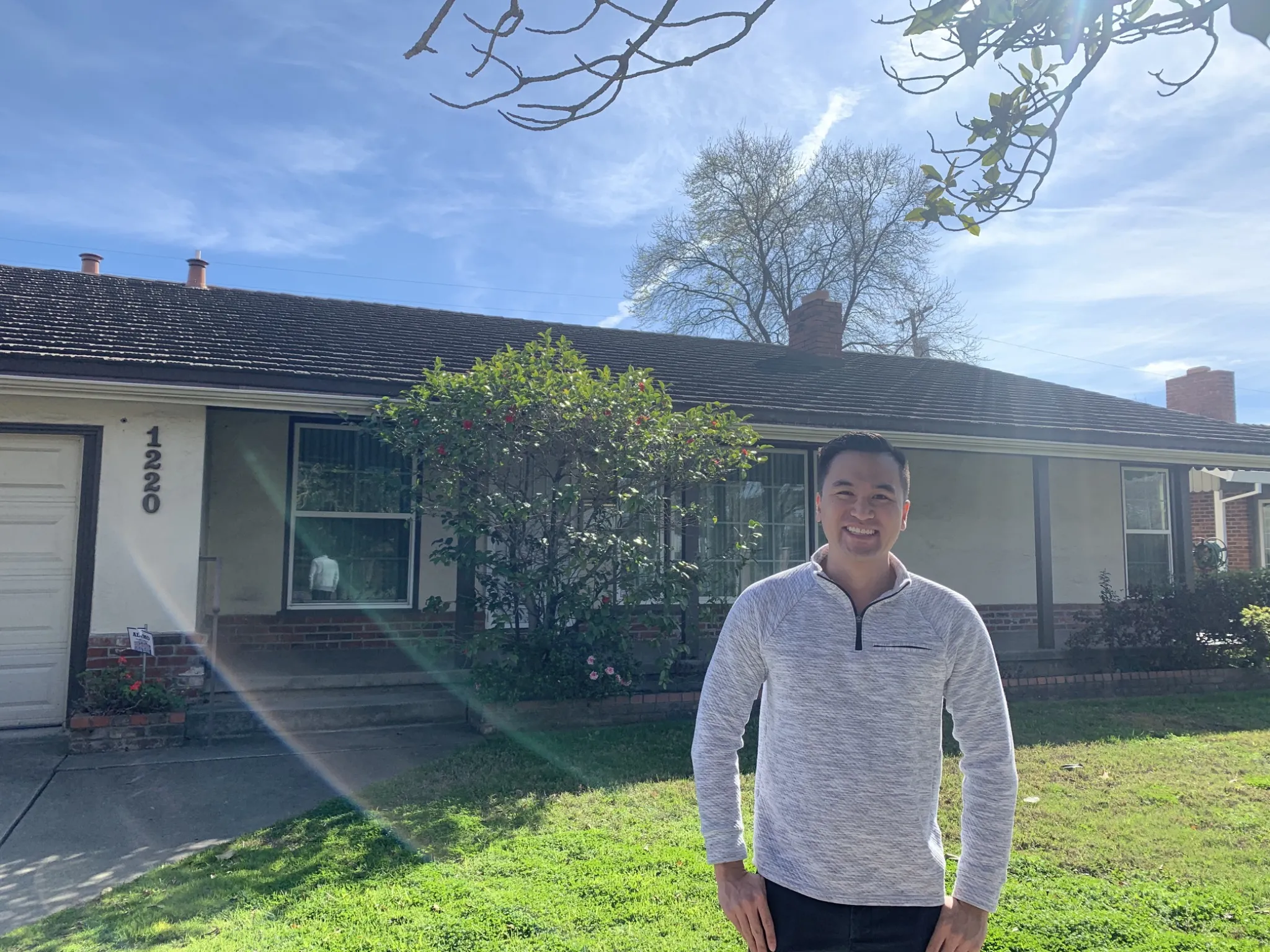
Me in front of one of my properties
Most importantly, I finally had the freedom I’d been chasing — the ability to make choices based on what I wanted, not just what I needed financially. That’s the freedom real estate can offer you too, if you’re willing to start.
Today, I continue investing in real estate and mentor others who want that same freedom for themselves. I also have more time than ever for what matters to me: family, travel, and training in martial arts (something I do 5 to 7 times a week).

So how did I get here? I share how in this quick video:
And if you want the exact steps I used — the ones you can apply too — read on.
Step 1: Calculate your target income with the reverse-engineering model
In short: Start by picking a specific monthly income target, then work backward to figure out how many properties you need and how long it will take.
Before you buy a single property, you need a specific goal. Without it, you’re not actually investing, you’re just hoping things work out.
Here’s the exact process I used to set my rental income goal and reverse-engineer my entire strategy. You can use the same framework, whatever your number turns out to be.
| Step | What to calculate | My number |
| 1. Monthly income target | The salary you want to replace | $10,000/month |
| 2. Income per property | Net rental income per property, renting by the bedroom | $1,500–$3,500/month |
| 3. Properties needed | Income target ÷ income per property | 4–5 properties |
| 4. Timeline | Properties needed ÷ properties purchased per year | ~4 years |
How much passive income do you need to replace your salary?
Start with your own number. As a full-time pharmacist earning six figures, I calculated that I’d need $10,000 per month in passive income to replace my salary and maintain my lifestyle. That became my financial freedom number.
Your number will depend on your own expenses and lifestyle, but the exercise is the same:
Figure out what you’d need coming in every month to walk away from your job, and use that as your target.
How many rental properties do you actually need?
Once you have a target, don’t just start buying houses and hoping the math works out — reverse-engineer it. I used the rent-by-the-room strategy (we’ll look at the full strategy in the next step) to maximize cash flow per property.
I estimated each property could generate $1,500 to $3,500 per month in net rental income if I bought in the right location.
Divide your income target by that per-property range, and you’ll get a real number of properties to aim for.
For me, that meant roughly 4-5 properties to hit $10,000/month.
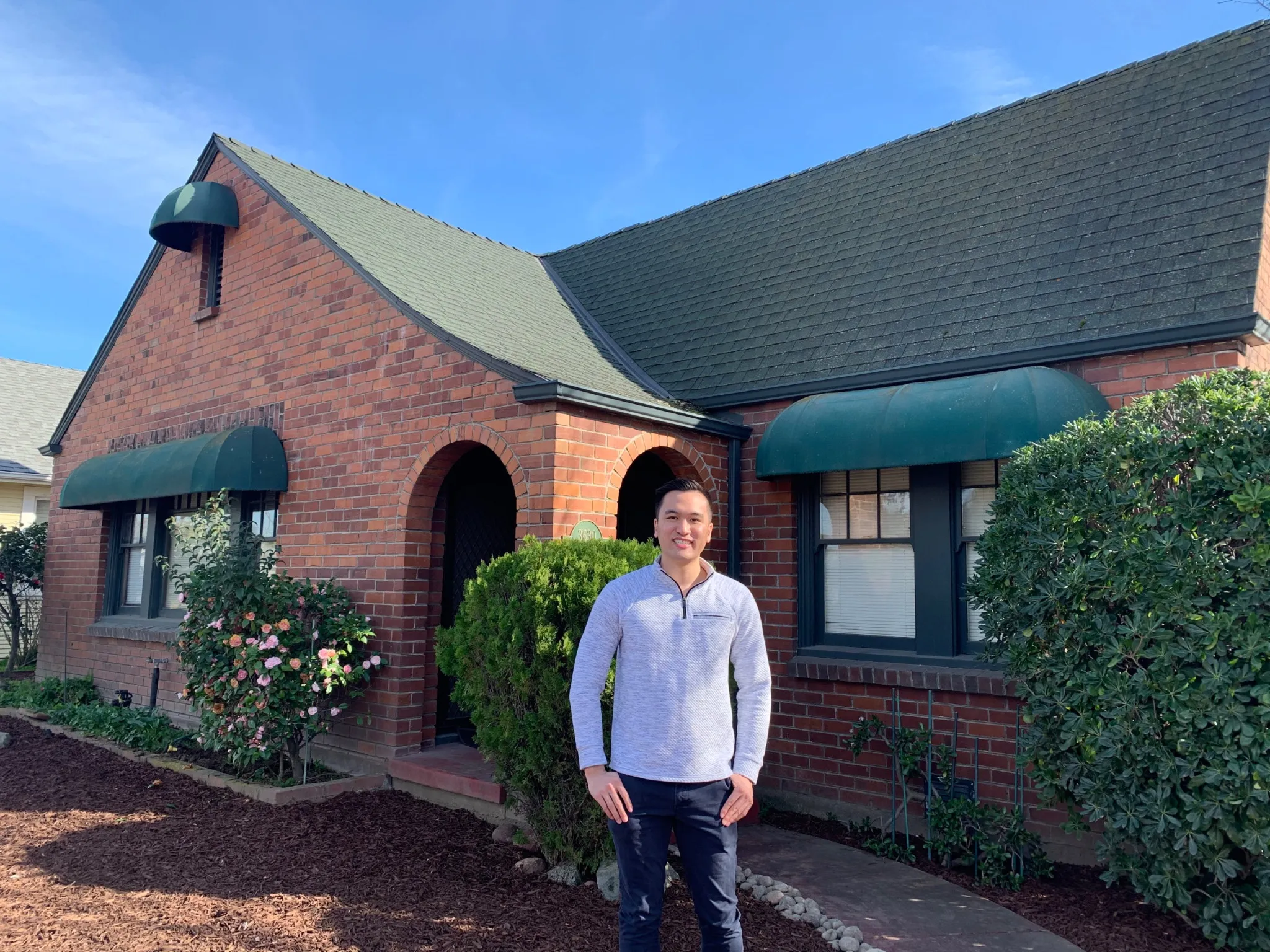
Fourth house purchase. Rentometer and Zillow estimated rent was ~$1600-1700 range. Because I converted this 3 bed 2 bath into a 5 bed 2 bath, I made $3150 per month on this house.
How long does it take to reach financial freedom with rentals?
With a property count in hand, the last step is timeline. I projected that buying just one property per year would get me to my goal in about four years — all while working my full-time job. That’s exactly what happened.
Your timeline will depend on how fast you can save and how aggressively you buy, but even one property a year compounds faster than most people expect.
The key takeaway: Make your goal specific and measurable. Don’t just say “I want to invest in real estate” — say “I want to earn $10,000/month in rental income in four years.” That level of clarity is what gives you the focus and urgency to make every real estate decision easier, instead of guessing your way through it.
Step 2: Choose the right strategy to build cash flow fast
In short: The strategy that built my cash flow fastest was renting by the room to college students near a university — not renting a whole house to one tenant.
I also lived in one of my early properties (a form of house hacking) to lower my down payment. But the room-by-room student housing model was what actually doubled or tripled my income and let me scale faster than traditional investors.
When you’re just starting out, your investing strategy can make or break your success — especially if your goal is to build cash flow quickly.
For me, that strategy was renting by the room to college students. Here’s how it works, and why I’d recommend it if you’re trying to move fast.
What is the rent-by-the-room student housing strategy?
My go-to model was student housing: buy single-family homes near universities, convert common spaces into extra bedrooms where possible, and rent each room to college students individually, rather than renting the whole house to one tenant or family.
This single change is what dramatically increased my monthly income and let me scale faster than traditional investors. Here’s what made it so powerful:
- It doubled or tripled my income. Renting by the room instead of by the house meant that by the 5th or 6th bedroom, I was earning 2x-3x the rent a whole-house lease would bring in.
- It sped up my timeline. Higher cash flow meant more savings, which meant I could buy my next property sooner.
If you want to reach financial independence faster than a traditional buy-and-hold investor, this is the model I’d point you toward — it’s what got me there in just a few years, even with a full-time job.
Is renting by the room legal where you’re buying?
Check before you commit to this strategy because there are restrictions in some locations. Many cities and counties have zoning laws or occupancy ordinances that limit how many unrelated tenants can live in a single-family home.
Some require a separate rental license or permit for room-by-room leases. This is especially common in college towns, where cities sometimes cap occupancy specifically to manage student housing density.
Before you buy a property with this strategy in mind, verify:
- Your city or county’s occupancy limit for unrelated occupants in a single-family zone
- Whether room rentals require a separate business license, rental permit, or inspection
- Whether the property is zoned for the number of bedrooms you’re planning to create
A quick call to your local planning or zoning department, or a conversation with a real estate agent who knows the area, can save you from buying the wrong property.
Should you house hack your first property too?
One thing I did alongside this strategy, especially early on: I lived in one of the properties I bought instead of buying a rental and moving elsewhere. This is sometimes called house hacking — living in part of an investment property while renting out the rest.
It’s worth considering if you’re trying to buy your first property with less cash up front, since house hacking often qualifies you for a much lower down payment — typically 3-5%, versus 15-20% for a standard investment property.
It’s not required for the room-by-room model to work. But combining the two is how I kept my own upfront costs down while getting hands-on management experience.
Are college students reliable tenants?
If you’re on the fence about student housing, it’s probably because you assume student renters are risky. In my experience, that assumption doesn’t hold up:
| What you might expect | What I actually found |
| Missed or late rent | Parents pay the rent — I rarely deal with missed payments, since no parent wants their child evicted mid-semester |
| No financial backup | Parents act as informal guarantors, giving payment security |
| Poor upkeep | Parents care about living conditions, and students are usually out during school breaks |
| Immature tenants | Prioritizing grad students or serious undergrads gets you focused, low-drama renters |
| Hard to fill rooms | I charge $600-700/month per room vs. $1,200+ for on-campus housing — an easy sell for students |
If you price your rooms below on-campus housing and screen for serious students, you’re working with one of the best tenant pools available to a new landlord.
I share my entire house hacking and student housing system here:
Step 3: Save for a down payment and buy your first rental property while working full-time
In short: You don’t need a big network or a pile of savings to buy your first rental. If you can save consistently and pick the right location, the biggest obstacle isn’t money — it’s fear.
One of the biggest myths in real estate investing is that you need a big network or millions in the bank.
That couldn’t be further from the truth. I bought my first rental property while working full-time as a pharmacist, using all my own cash. I started at $0, with no connections.
If I could do it from zero, you can too. Here’s exactly how.
How do you save for a down payment while working full-time?
Real estate is capital-intensive, so you’ll need significant savings for a down payment. Here’s what worked for me:
- Worked overtime shifts — sometimes 14 to 16 hours a day
- Held two jobs (retail and hospital pharmacy)
- Lived below my means while still enjoying a reasonable lifestyle
- Invested excess cash into mutual funds until I had enough for a down payment
| What | Detail |
| Time to save | ~1 year |
| Purchase price | $262,000 |
| Down payment and closing costs | ~$52,400 (20%) |
| Property type | Single-family home |
After a year of consistent saving, I had enough for a 20% down payment.
In 2016, I purchased my first property for $262,000 — putting down roughly $52,400 including closing costs.
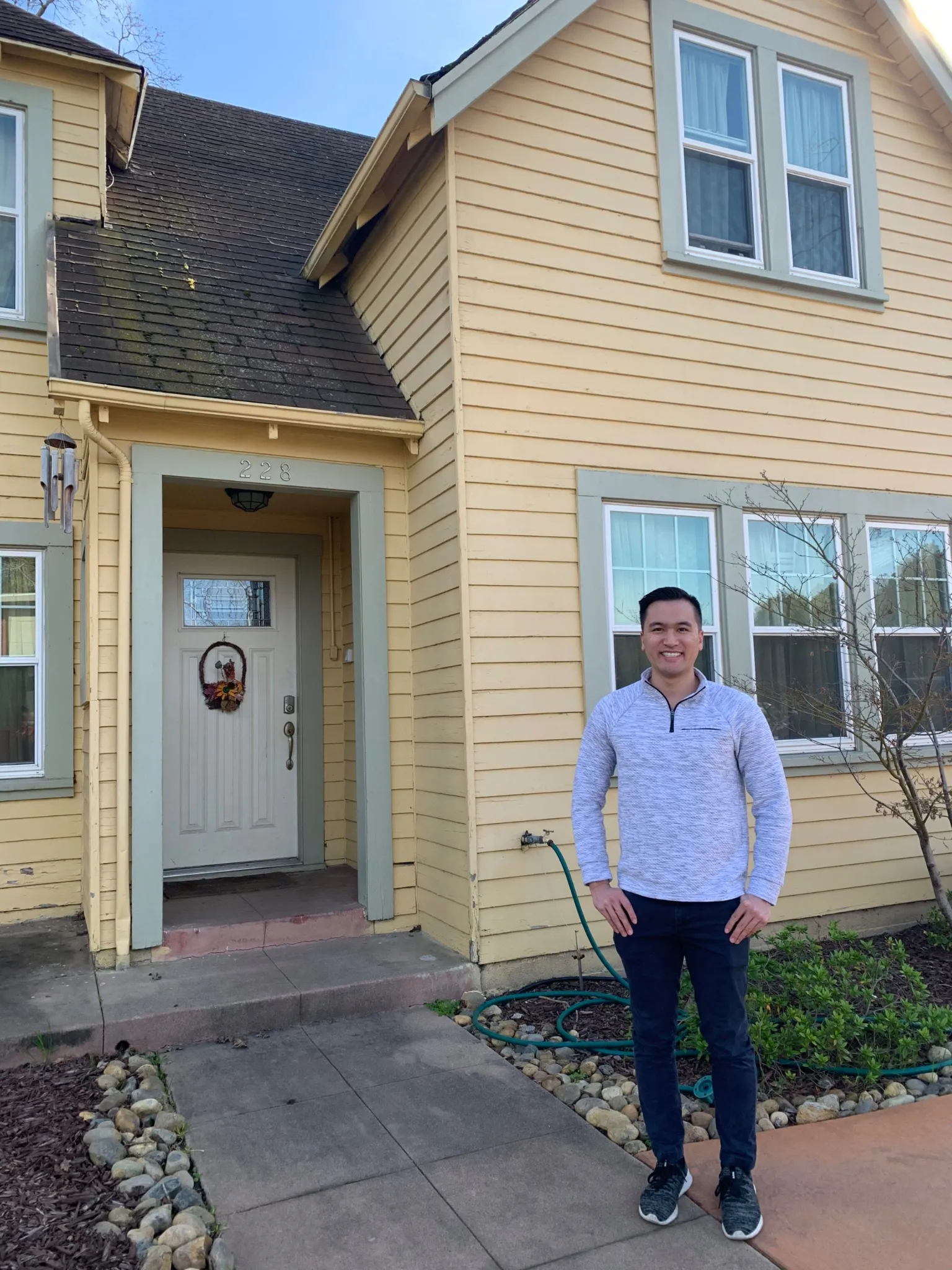
You don’t need to save this exact amount or follow this exact timeline — what matters is picking a savings method you can sustain, and sticking with it until you hit your number.
That first purchase, a single-family home, became the foundation of my entire portfolio.
Where should you buy your first rental property?
I live in California, so my first investments were in my home state. In general, the best place to invest is usually your own local area — you already know the market, and you have easy access to the property.
Within that, I specifically targeted college towns as part of the rent-by-the-room student housing strategy.
If you’re deciding where to buy, here’s what makes a property near a university worth considering:
- Consistent tenant demand from students every semester
- Higher rental income through a rent-by-the-room model
- Market stability — as long as the university operates, housing demand tends to hold
What financing works for a first rental property?
I used conventional financing with 20% down, which gave me favorable interest rates. It’s a straightforward path, but it takes discipline.
What’s the biggest obstacle to buying your first rental property?
Honestly, it isn’t the money — it’s fear. If you have no prior experience, every step will feel overwhelming at first, and that’s normal.
The thing that changed it for me was finding a real estate agent who was also an investor. He understood the strategy I wanted to use and guided me through the entire process, from deal analysis to closing.
If you’re stuck at this stage, this is the move: find a mentor who understands the strategy you want to run.
Having someone in your corner who knows the industry is one of the best ways to overcome fear and make smart investing decisions — instead of freezing up before you even start.
Step 4: Reinvest profits to scale your portfolio
In short: The fastest way to stall your portfolio is spending your rental profits as soon as they show up. I reinvested 100% of my cash flow for the first four years and only started spending on myself once the portfolio was established. That discipline, plus using leverage wisely, is what let me scale from one property to seven figures.
One of the biggest mistakes I see new investors make is spending their rental profits too soon.
The moment cash flow shows up, it’s tempting to upgrade your lifestyle — a new car, a nicer trip, more dinners out. If you do that, you’ll slow your own momentum before it has a chance to build.
Here’s what I did instead, and why it’s the single biggest lever for scaling fast.
Should you spend or reinvest your first rental profits?
Reinvest — at least at first. I put every dollar of rental income back into growing my portfolio rather than spending it.
It wasn’t until several years in, once the portfolio was established, that I felt comfortable using rental cash flow to travel more or eat out more often.
If you’re earning cash flow from your first property right now, resist the urge to treat it as spending money. Redirecting it into your next down payment is what turns one property into a portfolio.
How do you scale from one rental property to a full portfolio?
Here’s exactly how I scaled from one property to a seven-figure portfolio in four years — you can follow the same framework:
| What I did | Why it worked |
| Reinvested 100% of cash flow into new deals | No income was diverted to lifestyle spending |
| Combined rental profits with W-2 income | Funded larger down payments, faster |
| Bought one property per year | Kept growth steady without over-leveraging |
This disciplined, one-property-a-year pace let me scale without overextending myself financially — and without the stress of growing too fast, too soon.
How do you avoid lifestyle inflation as your rental income grows?
This is where most new investors lose momentum. While friends around me were splurging on bigger houses or exotic vacations, I kept my expenses modest, because I knew the long game would pay off.
Here’s why this discipline is so important:
- Compound growth kicks in when you reinvest instead of spend. Every dollar you keep in the business buys you more in year three or four than it would in year one.
- Each new property builds momentum — more cash flow, more equity, and more borrowing power for the next deal.
- Consistency beats perfect timing. Time in the market outperforms timing the market, and even experienced investors rarely get the timing perfect.
The earlier you start reinvesting, the faster your own portfolio compounds.
How does leverage help you scale a rental portfolio faster?
Reinvesting is only half the equation — the other half is using leverage wisely. Real estate is one of the only asset classes where you can:
- Use borrowed money (from banks) to grow your wealth
- Build equity through your tenants paying down your mortgage
- Benefit from appreciation and rising rents over time
- Let inflation work in your favor — your mortgage payment stays fixed while rents and property values rise
If you combine consistent reinvestment with smart use of leverage, the growth compounds in a way that’s hard to replicate with almost any other asset class.
Step 5: Systematize with tech and VAs (manage properties in under 1 hr/week)
In short: I was working 14-hour pharmacy shifts, so my portfolio had to run without me physically present. I built an automated tech stack that lets me spend under 1 hour a week managing my rentals. If you’re trying to scale while working full-time, this is the system that makes it possible.
As my portfolio grew, I quickly realized something: success wasn’t going to come from working harder, but from building systems that worked without me.
If you’re juggling a demanding job like I was, automation isn’t optional. It’s the only way the math works.
Here’s the exact stack I use to run my portfolio in under an hour a week.
How do you respond to rental leads instantly without being online 24/7?
Prospective student renters typically reach out to multiple properties at once. Whoever replies first usually wins their attention — so speed matters a lot.
Here’s how I automated it:
- I host listings on platforms like Avail or Apartments.com.
- Using custom Google App Scripts tied to my inbox, incoming inquiries trigger an automated email within 5 minutes — no matter what I’m doing at the time.
- That email instantly delivers a pre-recorded virtual video tour and a Google Form application link.
If you set up nothing else, set up this one system first. It’s the difference between capturing a lead and losing them to a competing listing that replied faster.
How do you manage bulk tenant communication without typing every email by hand?
Once leads start coming in, you need a way to send lease documents, rent reminders, and proof-of-income requests to dozens of applicants — without manually typing each one.
I use YAMM (Yet Another Mail Merge), a plugin inside Google Sheets. With one click, I can send personalized emails to an entire list while tracking open and click rates, so I know who’s actually engaging and who needs a follow-up.
Should you hire a virtual assistant to run your rental portfolio?
Yes, once you have enough properties that admin work is eating your time. I hire full-time virtual assistants to handle 80-90% of my daily operations.
Here’s what they take off my plate:
| Task | What the VA does |
| Inbound inbox management | Reviews incoming Google Form applications |
| Prequalification | Cross-checks applicant details against my screening standards |
| Showing coordination | Schedules and confirms in-person tours with tenants and applicants |
This is the piece that actually gets me to under 1 hour a week — the autoresponder and YAMM handle speed and volume, and the VA handles everything that still needs a human touch.
Step 6: Vet your tenants with the PRIME method™
In short: A single bad tenant can wreck a property’s cash flow, so I built a strict, repeatable screening framework called the PRIME Method, plus two non-negotiable rules: a $7,000-$10,000 savings buffer and full payment (first month, last month, and deposit) before a tenant gets their keys. This is how I keep occupancy high with minimal drama, even renting mostly to students.
Systems get leads in the door fast, but speed only works if you’re also filtering for quality. Since student renters often don’t have a long credit history, I couldn’t rely on a credit score alone. So I built a vetting process specifically for this.
What is the PRIME Method for screening tenants?
PRIME is the five-part framework I use to screen every applicant, especially for student and multi-tenant housing:
|
Letter |
Stands for |
What I do |
|
P |
Placement of advertisements |
List where ideal renters actually look — local university Facebook housing groups, Roomies.com, Uloop, Zillow |
|
R |
Review social media |
Manually check Instagram, Facebook, and TikTok for red flags like heavy partying, drug use, or property-damage risk |
|
I |
Identify personality fit |
Watch how they communicate early on; filter out entitled or aggressive applicants to protect house harmony |
|
M |
Measure responsiveness |
Prompt, respectful, instruction-following applicants tend to make prompt, respectful tenants |
|
E |
Ensure income & cash reserves |
Verify proof of income or a guarantor, plus a real savings buffer (see below) |
If you’re renting to students or first-time tenants without a long credit history, this framework gives you a repeatable way to evaluate them on more than just a credit score.
How much savings should you require from a tenant before approving them?
I require proof of a $7,000 to $10,000 cash savings buffer before approving any applicant. If a tenant loses a job, faces a tuition change, or hits an unexpected expense, this buffer is what keeps them from missing rent and defaulting on the lease.
What upfront payment should you require before handing over keys?
I always require tenants to pay the first month’s rent, last month’s rent, and a full security deposit. This single rule filters out a large share of the tenants who would otherwise become a problem six months into the lease.
My top tips for beginners (working full-time)
After building a seven-figure real estate portfolio while working 40+ hours a week, and helping other full-time professionals do the same, these are the lessons I’d want someone in your position to hear before they buy their first property.
If you’re new to real estate investing and you’re not planning to quit your job to do it, start here.
How much money do you need to invest in real estate if you’re working full-time?
For a typical $300,000 property, a 20% down payment means you’ll need at least $60,000 to get started — plus closing costs. That’s the baseline number to plan around if you’re saving from a W-2 income.
That said, this number isn’t fixed. It depends heavily on the path you take to get into your first deal.
For example, if you choose to house hack, you need significantly less money upfront.
Should you start with one rental property or several?
Start with one. Your first priority is to buy your first rental property, learn the fundamentals, and gain hands-on experience — not to build a portfolio overnight while still learning the basics.
If you’re working full-time and short on hours, one of the best strategies for beginners is renting out by the room. It offers higher cash flow with lower risk, and it builds your confidence as a landlord faster than a single-tenant property would.
Should beginners focus on cash flow or appreciation?
Focus on cash flow. Appreciation is a bonus, not a plan — cash flow is what actually pays the bills and keeps you afloat if the market turns.
I only invest in properties that generate positive cash flow from day one, so I’m never dependent on market timing or hoping a property’s value goes up.
This matters even more if you have a full-time job: you don’t have the bandwidth to actively manage a property that’s bleeding money while you wait for it to appreciate.
A cash-flow-positive property protects your time as much as your finances, especially during economic uncertainty.
How much time should you invest in learning real estate as a beginner?
Several hours a week early on — but it doesn’t have to compete with your job if you’re efficient about it.
The most successful investors I know treat real estate as a business, not a hobby, and that starts with the right mindset and education.
Here’s what I’d recommend, even with a full schedule:
- Read real estate investing books
- Listen to podcasts during your commute or downtime
- Take online courses
- Join local real estate investing meetups or Facebook groups
- Watch YouTube videos
- Invest in coaching if you can
Mindset and education are your most valuable early assets, and unlike capital, you can build them in the pockets of time a full-time job leaves you.
Do you need a mentor to succeed in real estate investing?
You don’t need one, but it will get you there faster with fewer expensive mistakes. You don’t have to figure everything out yourself — working with a coach or advisor who has a real track record is one of the fastest ways to get ahead, especially if your time to research and troubleshoot is limited.
To find the right mentor, start by asking questions and watching how they actually analyze deals and manage properties.
As a reference, here’s my own coaching program — I’ve helped plenty of people, many of them working full-time like you, get started and grow their portfolios fast:

Sydney was able to quit her day job entirely, thanks to her investments.
- Wahyudinata’s San Jose property now brings in $5,500/month in cash flow.
You can read more reviews here.
Ready to start investing in rental property while working full-time?
You now have the same framework I used to go from $0 to a seven-figure portfolio without leaving my job.
Thanks to the decision I made to invest in my first property, I now have the freedom to do things I love, like…

Travel with my family
And…

Spend more time on hobbies like martial arts!
The only thing left is to start.
If you’ve made it this far, you already have more of a plan than I did when I bought my first property.
You know how to set a real target instead of a vague goal. You know which strategy builds cash flow fastest.
You know what to save for and how to keep your time investment under an hour a week once things are running.
Most people never get past “I should probably look into real estate someday” and you’re well ahead in your journey.
But the gap between reading this and doing it is the same thing that almost stopped me: the fear of getting the first step wrong.
The way past that isn’t waiting until you feel ready — it’s picking a target number, running the math, and taking the first concrete action toward it, even if it’s just researching your local market this week.
You don’t need to have it all figured out before you start. You just need to start.
If you want help applying this to your own situation — your market, your income, your schedule — that’s exactly what I work with people on.
👉 Click here to learn more about my coaching and book your free strategy call.